Worldwide Shipping · Get a Custom Quote


Heat Transfer vs Printed Fabric Labels: Which One Lasts Longer (and Feels Better)?

If you’re choosing custom labels for clothing, one question comes up often:
Should you use heat transfer labels or printed fabric labels?
Both can work well, but they solve different problems.
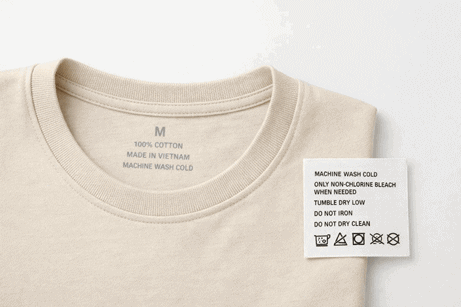
Heat transfer labels create a clean, tagless finish directly on the garment, while printed fabric labels are separate pieces that are sewn into the garment.
The better option depends on your garment, label placement, artwork, comfort requirements, amount of information, and how the label will be used.
What Are Heat Transfer Labels?
Heat transfer labels apply branding or information directly onto the garment using heat and pressure.
Because there is no separate fabric label sewn into the garment, heat transfer is useful when reducing bulk or avoiding label edges is important.
Common applications include:
Inside-neck branding
Size information
T-shirts and basics
Activewear
Underwear
Lightweight garments
Products where a tagless feel is preferred
Heat transfer performance depends on the garment fabric, stretch, artwork, application area, and the transfer system used.
Potential issues can include fading, cracking, or peeling if the transfer type or application conditions are not suitable for the garment.
What Are Printed Fabric Labels?
Printed fabric labels are separate fabric pieces with artwork or information printed onto the surface and then sewn into the garment.
They are commonly used when the label needs to contain more information, such as:
Care instructions
Fiber composition
Country of origin
Size information
Company or brand information
Multiple languages
Symbols or detailed text
Printed labels can be placed in areas such as the side seam, waistband, inside neck, or other garment locations depending on the construction.
Comfort depends on the material, finished edges, placement, size, and sewing method.
Durability & Wash Performance
There is no single durability winner for every garment.
Both heat transfer labels and printed fabric labels can perform well when the correct material, production method, and application are used.
Heat transfer labels may show wear through:
Gradual fading
Cracking
Peeling if the application is unsuitable
Printed fabric labels may show wear through:
Print fading
Edge wear or fraying
Changes in hand feel after repeated washing
The actual result depends on factors such as garment fabric, washing conditions, drying temperature, label material, application method, and production quality.
If durability is especially important, tell us how the garment will be used and washed so the label construction can be reviewed before production.
Comfort & Feel
If reducing label bulk is the priority, heat transfer is often a practical option because there is no separate fabric piece or sewn edge.
This can make it suitable for:
Inside-neck branding
Activewear
Underwear
Lightweight garments
Products where skin contact is important
Printed fabric labels can also be comfortable when the material, finished size, placement, and edge finishing are appropriate.
For garments where a sewn label sits directly against the skin, placement and material choice become especially important.
Text Capacity & Garment Information
One of the clearest differences between heat transfer labels and printed fabric labels is how much information they can comfortably carry.
Heat transfer labels work especially well for simpler content such as:
Brand logo
Brand name
Size
Short garment information
Printed fabric labels are usually more practical when the label needs to include more detailed information, such as:
Care instructions
Fiber composition
Country of origin
Multiple languages
Care symbols
Company or brand information
Product variations
This is why many clothing brands use more than one labeling method rather than trying to fit all information into a single label.
For more detailed garment labeling requirements, see our:
Care Label Requirements for Clothing: USA, UK, EU & Canada →
Can You Use Heat Transfer and Printed Labels Together?
Yes.
Heat transfer labels and printed fabric labels can serve different purposes on the same garment.
A common setup might use:
Heat transfer for inside-neck branding or size information
Printed fabric labels for permanent care and garment information in the side seam
Other brands may use a woven brand label together with a printed care label, or choose a different combination depending on the garment.
The best setup depends on what each label needs to do, where it will be placed, and how much information it needs to carry.
Best Use Cases
Choose Heat Transfer Labels When:
You want a tagless appearance
Reducing label bulk is important
The content is relatively short
You need inside-neck branding or size information
The garment construction is suitable for heat application
Choose Printed Fabric Labels When:
You need multiple lines of text
Care or garment information needs to remain with the product
You need multiple languages or care symbols
You want a traditional sewn-in label
Flexible placement such as the side seam or waistband is important
| Factor | Heat Transfer Labels | Printed Fabric Labels |
|---|---|---|
| Construction | Applied directly to the garment | Separate fabric label sewn into the garment |
| Best for | Tagless branding and short information | Detailed garment and care information |
| Bulk | Very low | Depends on material and construction |
| Typical placement | Inside neck or other suitable flat areas | Neck, side seam, waistband, and other sewn locations |
| Text capacity | Better for simpler layouts | Better for information-heavy layouts |
| Comfort | No separate label edge | Depends on fabric, finish, size, and placement |
How to Choose
Start with three questions:
1. What information needs to be included?
For a logo, brand name, or size mark, heat transfer may be suitable.
For care instructions, fiber composition, multiple languages, care symbols, or detailed garment information, printed fabric labels are often more practical.
2. Where will the label be placed?
Inside neck, side seam, waistband, and other garment locations each have different requirements.
Choose the production method together with the intended placement rather than treating the label type as a separate decision.
3. What is the garment made from?
Fabric type, stretch, thickness, surface treatment, and intended use can affect whether a heat transfer or sewn label is more appropriate.
If you are unsure, send us the garment type, artwork, placement, and the information you need to include. We can review the setup before production.
Recommended Label Placement
Common starting points include:
Inside back neck: heat transfer branding, size information, or selected sewn brand labels
Side seam: printed care and garment information
Waistband: printed or heat transfer applications depending on the garment
Hem or external branding: woven or other sewn brand labels
These are common examples rather than fixed rules.
The final setup should match the garment construction, label content, artwork, comfort requirements, and intended use.
Need Help Choosing?
Not Sure Which Label Type Fits Your Garment?
Send us your garment type, label placement, artwork, quantity, and the information you need to include. We can review the setup and recommend a practical option based on your product and production requirements.
FAQ
Are heat transfer labels the same as tagless labels?
Heat transfer is commonly used to create a tagless label because the design is applied directly onto the garment instead of using a separate sewn-in fabric label.
Do heat transfer labels peel or crack?
Performance depends on the transfer system, garment fabric, stretch, application conditions, and washing or drying conditions. The transfer method should be selected based on the garment and intended use.
Which option is better for care labels?
Printed fabric labels are often more practical when the label needs to include multiple lines of care instructions, fiber composition, care symbols, origin information, or multiple languages.
Can one garment use both heat transfer and printed fabric labels?
Yes. For example, a garment may use heat transfer for inside-neck branding or size information and a separate printed fabric label for permanent care and garment information.