Free worldwide shipping on orders over $88.

Heat Transfer vs Printed Fabric Labels: Tagless vs Sew-In (Which One Should You Choose?)

If you’re ordering custom clothing labels, this choice shows up almost every time:
Heat transfer labels (tagless) or printed fabric labels (sew-in)?
They look similar in photos, but they behave differently in real life—especially after repeated washing, drying, and daily wear. This guide gives you the no-fluff answer, plus quick recommendations by garment type.
What are heat transfer labels (tagless labels)?
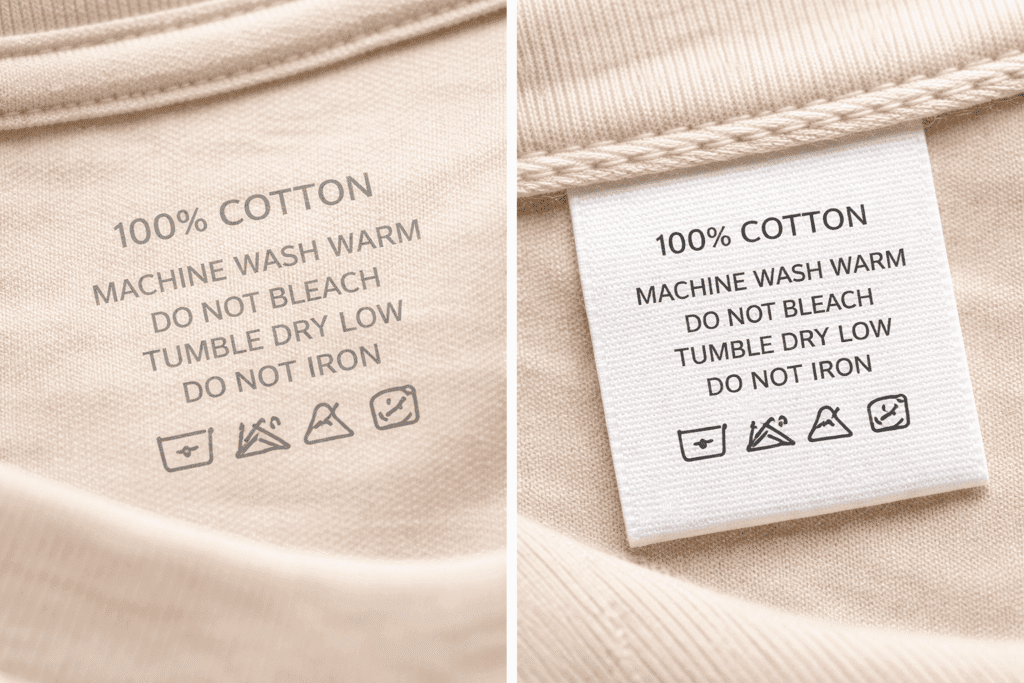
Heat transfer labels are printed directly onto the garment using heat and pressure. There’s no sewn label piece—just a clean printed mark inside the shirt (usually the back neck or inner chest area).
Why brands use them:
Super comfortable (no edges, no scratch)
Clean “tagless” look
Fast to read and minimal
Where they work best:
T-shirts and basics
Activewear and performance fabrics (with the right transfer type)
Kidswear / sensitive-skin products
Minimal inside branding
What can go wrong (rare, but real):
Fading over time
Cracking if the wrong type is used
Peeling if application is poor (pressure/temperature/time)
Internal link (place here):
Anchor: heat transfer labels →
Anchor: get a quote →
What are printed fabric labels (sew-in labels)?
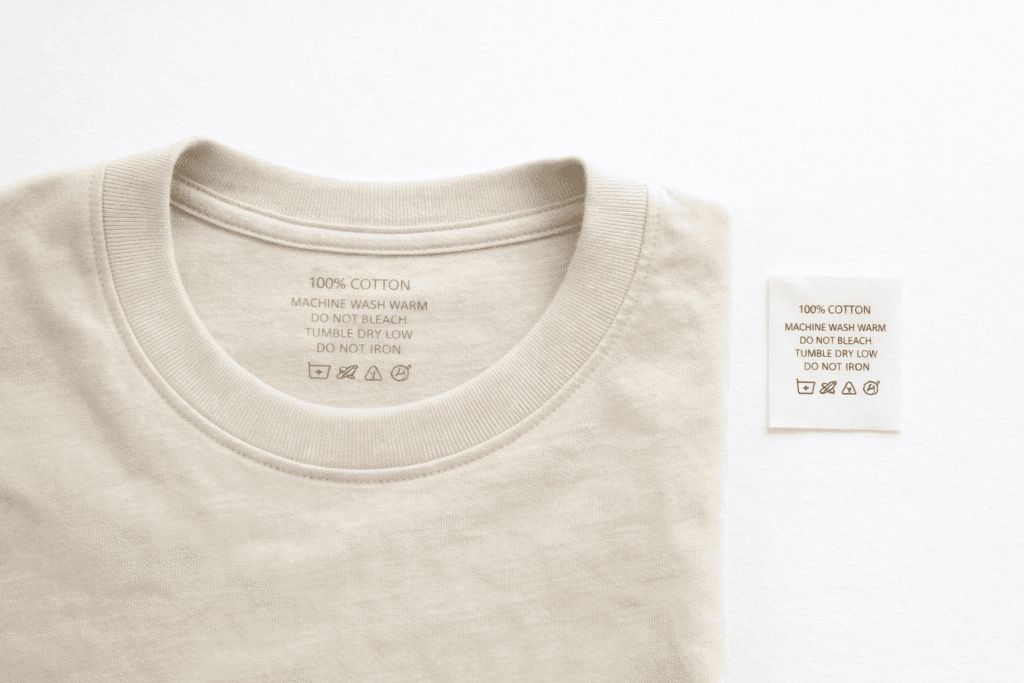
Printed fabric labels are separate fabric pieces that get printed with your design/text, then sewn into the garment like a traditional label.
They’re commonly used for:
Care instructions
Fiber content
Country of origin
RN/company info
Multi-language text
Why brands use them:
Holds more text in a clean layout
Looks “traditional” and premium when finished well
Flexible placement (side seam, waistband, etc.)
What can go wrong:
Material choice can feel scratchy (especially at the neck)
Cheap printing can blur small text
Poor edge finishing can irritate skin
Internal link (place here):
Anchor: heat transfer labels →
Anchor: get a quote →
Comfort: which feels better?
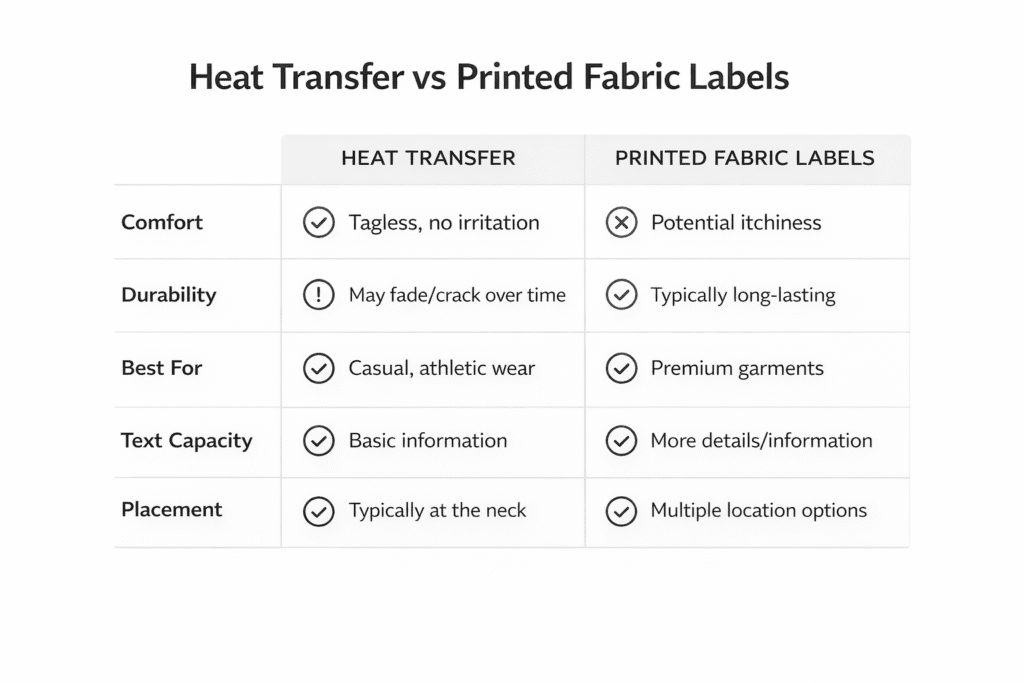
If comfort is your #1 priority, heat transfer usually wins.
Why: it’s flat and has no edges. That matters a lot for:
neck labels
kidswear
basics where people hate itchy tags
But printed fabric labels can still be comfortable if you do it right:
place them in the side seam
choose a soft material
avoid sharp cut edges and rough stitching
Comfort ranking (typical):
Heat transfer (tagless neck branding)
Soft printed label in side seam
Printed label at neck with stiff material (avoid unless necessary)
Durability & wash performance (what lasts longer?)
This is the part people oversimplify.
There isn’t a universal winner.
Durability depends on the transfer type/ink, fabric, washing habits, and whether you use high-heat drying.Heat transfer labels tend to “fail” like this:
gradual fading
cracking (more common if stretched a lot + wrong transfer type)
peeling (usually application issue)
Printed fabric labels tend to “fail” like this:
ink fading
fabric fraying if edges aren’t finished well
label fabric getting rougher after many washes (material issue)
Simple durability tip:
If your customers use a hot dryer every time, both methods will age faster. If you want maximum lifespan, recommend wash cold + tumble low.
Text capacity & compliance (this is where printed fabric labels win)
If you need to include:
long care instructions
fiber content percentages
country of origin
company identity / RN info
multiple languages
…a printed fabric label is usually cleaner and easier to read.
That’s why many brands do a “two-label system”:
Heat transfer for tagless neck branding
Printed fabric care label in the side seam
Internal link (place here):
Anchor: Care label requirements guide →
Anchor: free templates →
Best use cases (pick based on your product)
Choose heat transfer labels if you’re making:
Tees, basics, loungewear
Performance/activewear (low bulk, flexible)
Kidswear (comfort)
Minimal inside branding
Choose printed fabric labels if you need:
Care/compliance info
Multi-line text
Side seam placement
A traditional sewn-in label look
Common “pro” setup:
Neck: heat transfer
Side seam: printed care label
Optional: woven brand label on hem for premium branding
Internal link (place here):
Anchor: woven brand labels →
Quick decision guide (30 seconds)
If you just want the shortcut:
Pick heat transfer if:
comfort matters most
you want tagless inside branding
your content is short (logo + size)
Pick printed fabric labels if:
you have lots of text
you need care/fiber/origin info
you want flexible placement options
If you’re still stuck:
Do this simple rule:
Neck = heat transfer
Side seam = printed care label
Next step: we’ll recommend the best option for your garment
Send us:
garment type (tee/hoodie/activewear/kidswear)
label placement (neck/side seam/waistband)
your logo + label text (care info if needed)
We’ll suggest the right method and format it production-ready.
Buttons(你可以做成两按钮):
Primary: Get a Quote →
Secondary: Explore Printed Labels →
FAQ
Are heat transfer labels the same as tagless labels?
Most of the time, yes. “Tagless” usually means the information is applied directly to the garment (often via heat transfer).
Do heat transfer labels peel off?
High-quality transfers applied correctly should hold up well, but harsh drying + poor application can shorten lifespan.
Which is better for care labels?
If you need multiple lines of text, a printed fabric care label is often easier to read and manage.
Can I use both methods in one garment?
Yes—and it’s common: heat transfer for inside neck branding, printed fabric label for care info in side seam.