Free worldwide shipping on orders over $88.

Clothing Hang Tags: A Complete Guide to Types, Materials, Design & Branding Impact(2026)

In the fashion industry, details are never “small.”
A clothing hang tag is often the first physical interaction a customer has with your brand—and that moment quietly shapes perceived value, trust, and willingness to pay.
This guide breaks down everything brands need to know about clothing hang tags, from materials and finishes to design strategy and branding psychology—so you can make decisions that actually move the needle.
What Is a Clothing Hang Tag?
A clothing hang tag is a removable label attached to a garment, typically used to display:
Brand name and logo
Product name or SKU
Price or barcode
Care or sustainability information
But in modern branding, a hang tag is much more than an information card.
It is a brand signal.
Within seconds, customers subconsciously judge:
Is this brand premium or cheap?
Is it thoughtful or generic?
Does it justify the price?
Why Clothing Hang Tags Matter in Branding
Many brands underestimate hang tags because they are “temporary.”
That’s a costly mistake.
Hang tags influence:
First impression quality
Perceived craftsmanship
Brand professionalism
Emotional connection
A well-designed hang tag can increase perceived value by 10–30%, even when the product itself stays the same.
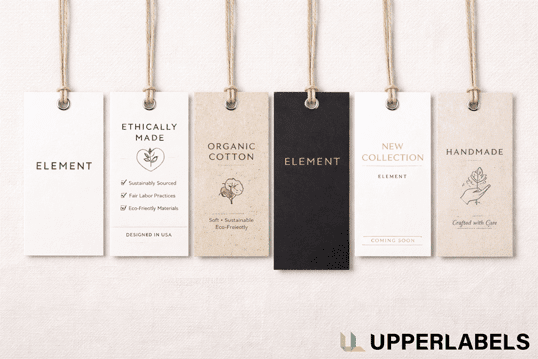
Common Types of Clothing Hang Tags
1. Standard Paper Hang Tags
The most common option in the apparel industry.
Best for:
Entry-level brands
Fast production cycles
Budget-sensitive collections
Limitations:
Thin paper reduces perceived value
Minimal tactile impact
2. Thick Cardstock Hang Tags (Premium Standard)
This is where brands start to feel “serious.”
Key features:
High GSM paper (300–700gsm)
Noticeable edge thickness
Strong hand-feel
Ideal for:
DTC brands
Mid-to-high-end fashion
Products positioned as “quality-first”
3. Folded Hang Tags (Bi-fold / Tri-fold)
Folded hang tags allow more storytelling without clutter.
Common uses:
Brand story
Fabric explanation
Sustainability messaging
Care instructions
They feel intentional and considered—especially effective for premium brands.
4. Custom Shape & Die-Cut Hang Tags
Non-rectangular hang tags immediately stand out.
Best practices:
Shapes should reinforce brand identity
Avoid novelty without purpose
Balance creativity with readability
When done right, they dramatically increase memorability.
Clothing Hang Tag Materials Explained
Paper Options
Uncoated paper – natural, minimal, premium feel
Coated paper – vibrant colors, sharp graphics
Recycled paper – sustainability-focused brands
Specialty Materials
Kraft paper
Textured paper
Cotton paper
Rule of thumb:
Material should match brand positioning—not just price point.
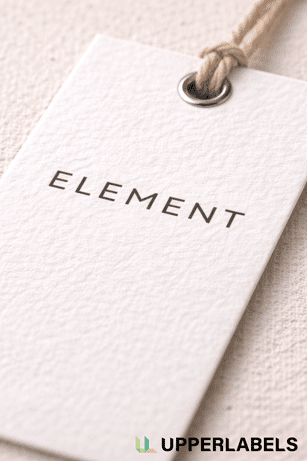
Surface Finishes That Elevate Hang Tags
Finishing techniques often separate premium brands from average ones.
Matte lamination – refined, modern, non-glossy
Soft-touch coating – tactile luxury, instant impact
Spot UV – subtle contrast and focus
Foil stamping – logo emphasis (gold, silver, colored)
Embossing / Debossing – tactile brand memory
These finishes cost little compared to the value they add.
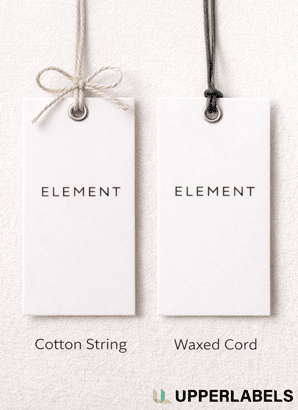
Hang Tag Strings & Attachments
The attachment method affects perception more than most brands realize.
Cotton string – natural, organic feel
Waxed cord – premium and durable
Safety pin – streetwear or utility aesthetic
Plastic fastener – economical, less premium
A weak attachment can undermine an otherwise strong design.
Clothing Hang Tags vs Woven Labels
They serve different roles but work best together.
| Feature | Hang Tags | Woven Labels |
|---|---|---|
| Visibility | Pre-purchase | Lifetime of garment |
| Purpose | First impression | Brand permanence |
| Design freedom | Very high | Moderate |
| Branding impact | Emotional trigger | Long-term recall |
Smart brands design both as part of one system.
Common Hang Tag Mistakes Brands Make
These mistakes quietly kill brand perception:
Paper too thin
Generic fonts
Logo too small
No finishing techniques
Cheap string or fasteners
Hang tags should never feel like an afterthought.
Final Thoughts: Hang Tags Are a Branding Investment
Customers don’t just buy clothing—they buy confidence, identity, and feeling.
A clothing hang tag is not disposable branding.
It is the first proof that your brand cares about quality.