
When it comes to custom hang tags, most brands focus on design first.
Logos. Fonts. Colors.
But here’s the truth:
the material matters just as much as the design — sometimes more.
A great hang tag should feel right before it even gets read.
In this guide, we’ll break down the most common hang tag materials, paper thickness, and finishes — and help you choose what actually fits your brand (not just what looks good online).
Why Hang Tag Material Matters More Than You Think
Customers don’t analyze hang tags.
They feel them.
The weight, texture, and finish instantly send signals:
premium or budget
minimalist or expressive
thoughtful or generic
If your tag feels cheap, it quietly drags your product down — even if everything else is perfect.
1. Common Hang Tag Paper Types (And When to Use Them)
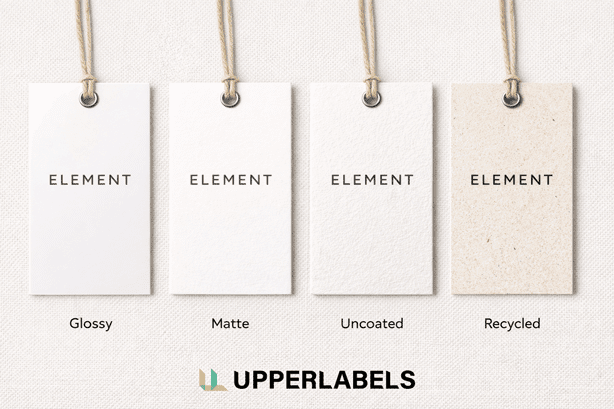
Coated Paper (Glossy or Matte)
Best for:
fashion brands with photography-heavy designs
modern, clean aesthetics
Pros:
sharp print quality
vibrant colors
Cons:
can feel “too commercial” for premium brands
Uncoated Paper (Natural / Textured)
Best for:
minimalist brands
eco-conscious positioning
premium clothing lines
Pros:
soft, natural feel
looks understated and confident
Cons:
colors appear slightly muted
Recycled Paper
Best for:
sustainable brands
handmade or small-batch products
Pros:
strong storytelling value
eco-friendly perception
Cons:
texture and color consistency can vary
2. Hang Tag Thickness (GSM) — What Feels “Right”?
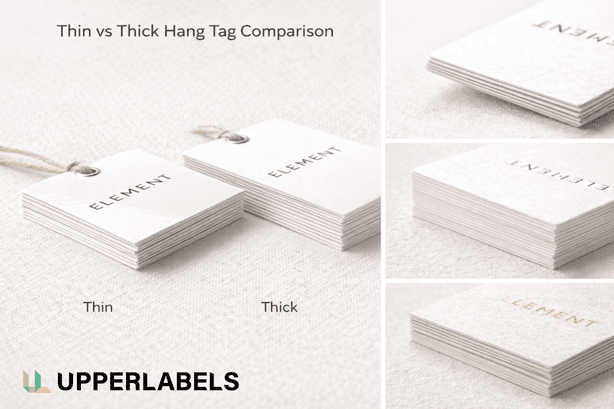
Thickness is one of the biggest quality signals.
General guideline:
300–350 GSM → standard retail
350–450 GSM → premium feel
450+ GSM → luxury / statement tag
Thicker doesn’t always mean better.
If your brand is minimal and refined, overly thick tags can feel forced.
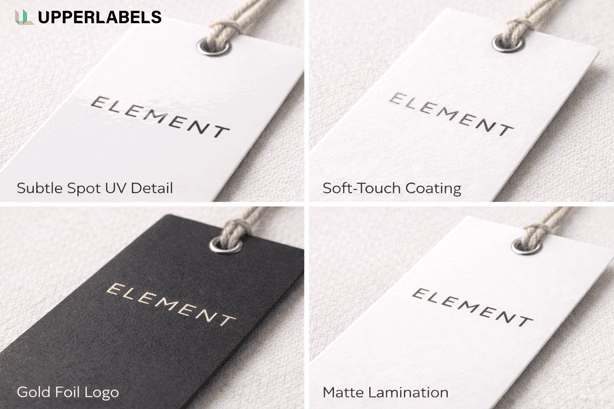
3. Finishes That Change How Your Tag Feels
Finishes are subtle — but powerful.
Common options:
Matte lamination → clean, modern, premium
Soft-touch coating → luxury feel, very tactile
Spot UV → highlight logos or text
Foil stamping → bold, but use sparingly
Rule of thumb:
If the finish draws more attention than the brand, it’s too much.
4. Minimal vs Statement Hang Tags (Material Makes the Call)
Here’s a simple way to decide:
Minimal design → let texture and thickness do the work
Bold design → keep materials restrained
Trying to go bold and heavy and glossy usually backfires.
5. How Hang Tags Fit Into Your Overall Brand System
Hang tags don’t exist alone.
They work best when aligned with:
woven labels
packaging
overall brand tone
If you haven’t planned that yet, start here:
https://upperlabels.com/how-to-choose-the-perfect-woven-label-size-a-designers-guide/
https://upperlabels.com/how-to-choose-the-perfect-woven-label-fold-for-your-brand/
Strong brands feel consistent — even in the details customers don’t consciously notice.
Final Thought
Design gets attention.
Material builds trust.
When customers pick up your product, the hang tag is silently answering one question:
“Does this brand care about details?”
Make sure the answer is yes.