Worldwide Shipping · Get a Custom Quote

Care Label Requirements for Clothing: USA, UK, EU & Canada Guide

If you sell clothing in the USA, UK, European Union or Canada, the information required on a textile or care label can vary significantly by market.
Some countries regulate fibre composition, country of origin or business identity, while care instructions may be mandatory, optional or governed separately. A label that works for one market should not automatically be assumed to meet the requirements of another.
This guide gives clothing brands a practical overview of the main textile and care-labelling considerations in the USA, European Union, Great Britain, Northern Ireland and Canada. It also explains how to organise the information into a readable production-ready care label.
UPPERLABELS produces custom printed care labels for clothing brands. If you already know the information your garment needs, you can send us the text, size and artwork requirements and request a digital proof before production.
Important: This guide is for general information only and is not legal advice. Final labelling requirements should be checked for your product type, selling market and applicable local or retailer rules.
Care Label Requirements by Market: Quick Comparison
| Market | Main Requirement | Care Instructions | Key Note |
|---|---|---|---|
| USA | Fibre content, country of origin and company identity. | Required for covered apparel. | Company identity can generally be shown by business name or RN. |
| European Union | Fibre composition. | Not the core requirement under EU textile-labelling rules. | Required textile information should be clear and suitable for the selling market. |
| Great Britain | Fibre composition. | Not the core requirement under textile-labelling rules. | Great Britain covers England, Scotland and Wales. |
| Northern Ireland | Fibre composition under EU-aligned rules. | May be added, but are not the core textile-labelling requirement. | Check Northern Ireland separately from Great Britain. |
| Canada | Fibre content and dealer identity. | Voluntary under federal textile-labelling rules. | Required fibre-content information is generally shown in English and French. |
Important: Requirements vary by product and selling market.
This guide is for general information only and is not legal advice.
What Is a Care Label?
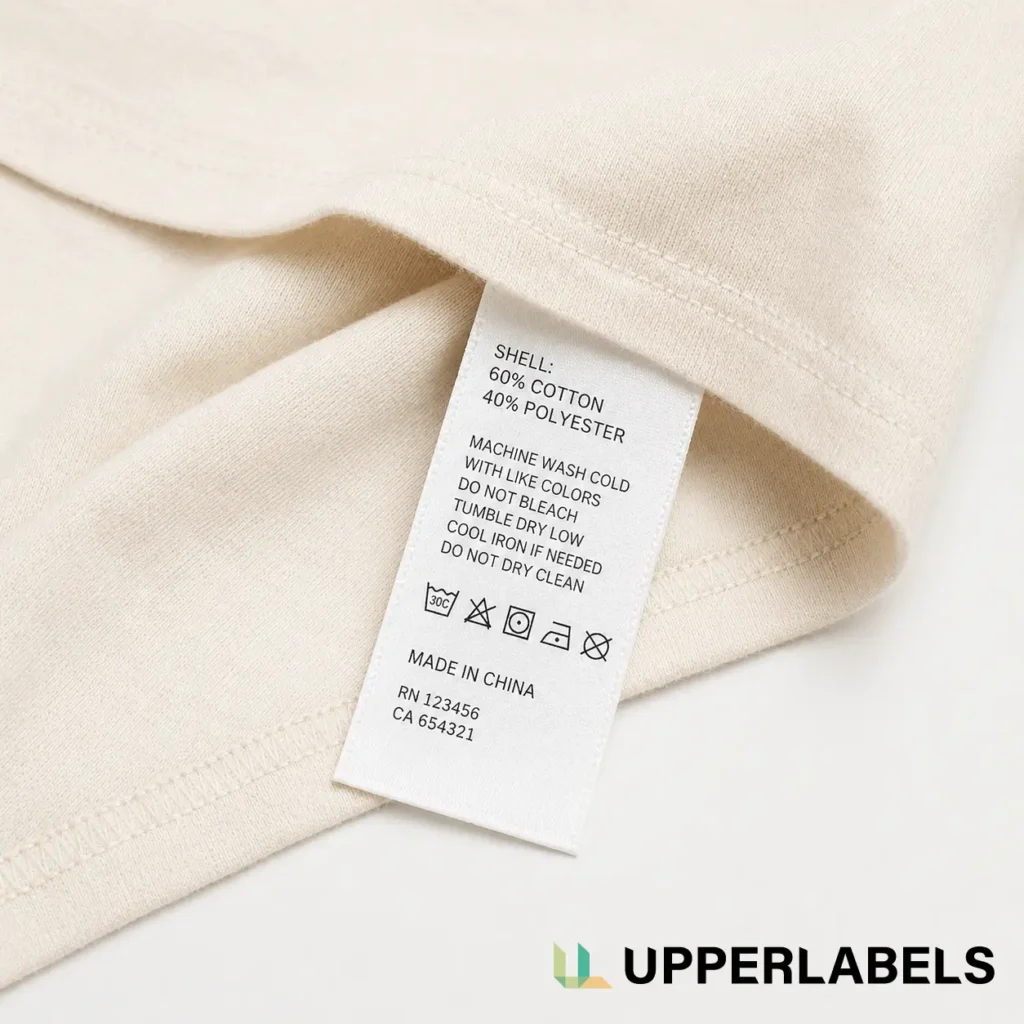
A care label is a small fabric label attached inside a garment. It usually provides washing and care information and may also include fibre composition, country of origin, business identification, size or production details depending on the product and selling market.
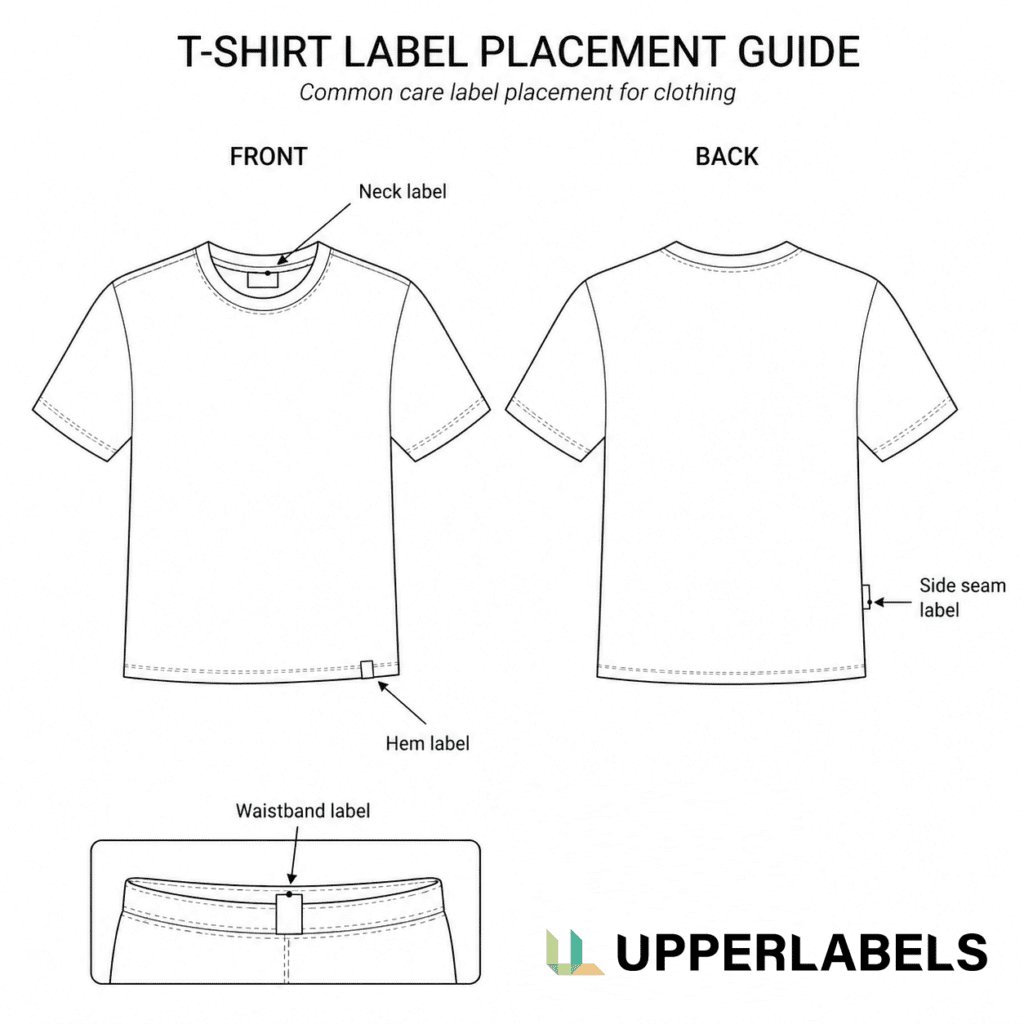
Care labels are commonly sewn into the neck, side seam or waistband. Printed fabric labels are often used because they can carry detailed text and care symbols in a compact, readable format.
What to Put on a Clothing Care Label
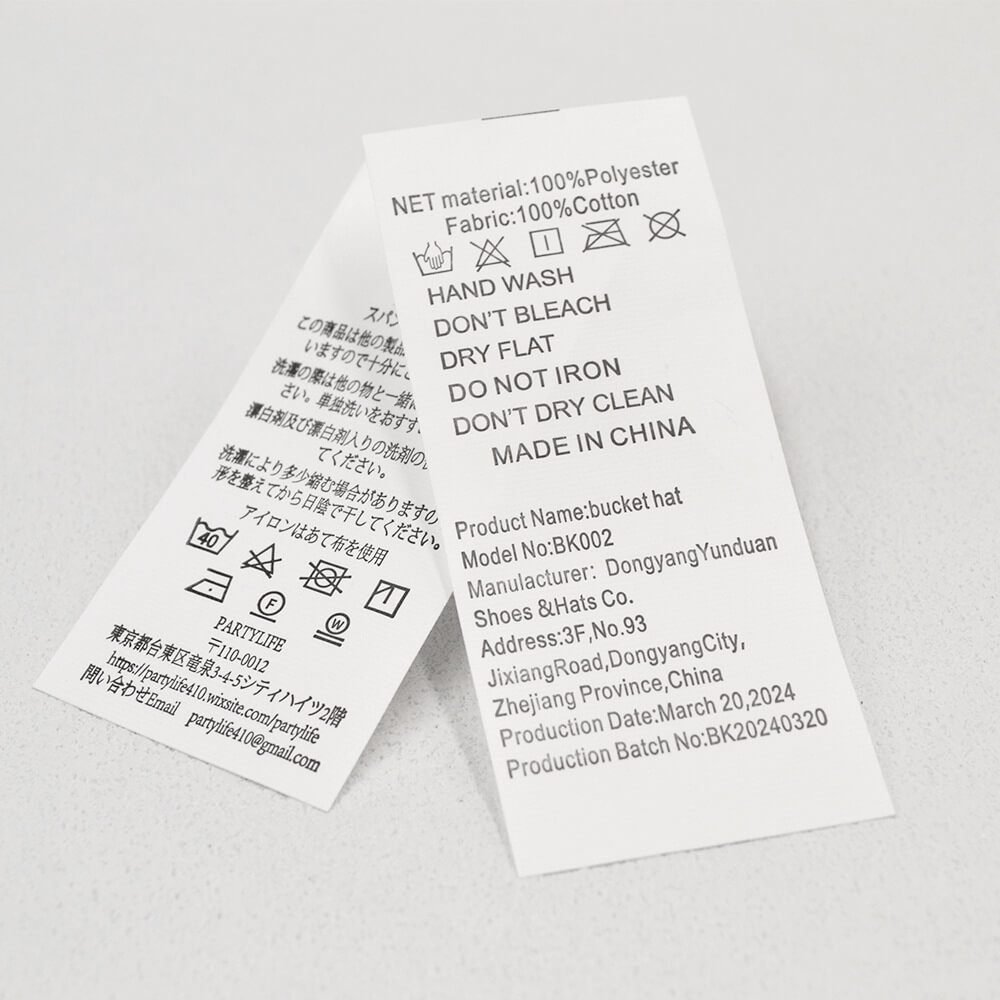
| Label Content | What It Means | Example | Production Advice |
|---|---|---|---|
| Fiber / Fibre Content | Shows the material composition of the garment. |
100% Cotton 60% Cotton / 40% Polyester | Keep percentages clear and avoid very small text if the label is narrow. |
| Care Instructions | Tells customers how to wash, dry, iron, bleach, or dry clean the garment. |
Machine wash cold Do not bleach Tumble dry low | Text instructions are often easier for small brands than symbol-only layouts. |
| Country of Origin | Identifies where the garment was made or processed, when required. |
Made in USA Made in China Made in Portugal | Confirm the correct origin wording before proof approval. |
| Company Identity | Identifies the brand, manufacturer, importer, dealer, or responsible company. |
Brand name RN number Dealer name | Place this line near the bottom if space is limited. |
| Size / Style / Batch Code | Helps with production tracking, inventory, or garment sizing. |
Size M Style No. 2048 Batch 2026-01 | Optional, but useful for brands producing multiple styles. |
USA Care Label Requirements
For clothing sold in the United States, several types of label information may apply.
For most covered textile products, FTC rules require the label to identify:
Fiber content
Country of origin
Manufacturer, importer, or other responsible dealer
The business identity can generally be shown using the company’s qualifying business name or an FTC Registered Identification Number (RN). An RN is optional — it is not required simply to sell textile products in the United States.
Covered apparel is also subject to the FTC Care Labeling Rule. The care label must provide regular care instructions that the consumer can refer to throughout the useful life of the garment.
In general, the care instructions should provide an appropriate washing or dry-cleaning method and include any warnings needed to prevent damage to the garment or other items.
Example of a Simple U.S. Label
SHELL:
100% COTTON
MACHINE WASH COLD
DO NOT BLEACH
TUMBLE DRY LOW
COOL IRON IF NEEDED
MADE IN PORTUGAL
RN 000000
Example only. The actual fibre content, country of origin, company identification and care instructions must match your product.
Need help arranging your approved label information into a production-ready layout? See our File & Artwork Guide or send the details through Get a Quote for a digital proof before production.
European Union Textile Label Requirements
For textile products sold to consumers in the European Union, the main EU labelling requirement is fibre composition.
In general, the label should:
Show the fibre composition clearly
Use recognised textile fibre names
Show the relevant fibre percentages
Be durable, legible, visible and accessible
Be securely attached to the product
Use the required language or languages for the country where the product is sold
If different textile components of a garment have different fibre compositions, those components may need to be identified separately.
EU textile rules also require a specific disclosure when a product contains non-textile parts of animal origin.
Are Care Instructions Required?
Care instructions are commonly added to clothing labels, but they are not the core mandatory requirement under EU Regulation (EU) No 1007/2011.
The regulation mainly governs textile fibre names and fibre-composition labelling.
Care information, size, origin and brand information may still be added where appropriate, but they should be clearly distinguishable from the required fibre-composition information.
Official source:
Great Britain Textile Label Requirements
For textile products sold in England, Scotland and Wales, the main textile-labelling requirement is accurate fibre content.
The label should clearly identify the fibres used in the product.
If a garment contains two or more textile components with different fibre compositions, the composition of the relevant components may need to be shown separately.
Are Care Instructions Required?
Care instructions are commonly added to clothing labels to help customers wash and maintain the garment.
However, under the Great Britain textile-labelling rules covered in this guide, fibre composition is the main mandatory textile information.
Brands may also add information such as:
Care instructions
Size
Country of origin
Brand information
Style or product codes
Additional information should be accurate and should not make the required fibre information unclear.
Official source:
GOV.UK — Textile Labelling
Northern Ireland Textile Label Requirements
Northern Ireland should be checked separately from Great Britain when preparing textile labels.
Under the Windsor Framework, textile fibre-labelling requirements in Northern Ireland continue to align with EU Regulation (EU) No 1007/2011.
For most consumer textile products, the main requirement is accurate fibre composition.
The label should:
Use recognised fibre names
Accurately show the fibre composition
Be legible and easy to find
Be durable and securely attached
What About Care Instructions?
Care instructions, size and country-of-origin information can also be added, but they are not the core mandatory information under the textile fibre-labelling rules discussed here.
Official source:
Northern Ireland Business Info — Textile Labelling Rules
Canada Textile Label Requirements
For consumer textile products sold in Canada, the federal textile-labelling rules focus mainly on two types of information:
Fibre content
Dealer identity
Fibre Content
The label should show the generic name and percentage of the fibres that must be disclosed under the applicable rules.
Required fibre-content information is generally shown in both English and French.
For example:
65% COTTON / COTON
35% POLYESTER / POLYESTER
Dealer Identity
The label must also identify the responsible dealer using either:
The company name and mailing address, or
An eligible CA Identification Number
Dealer identification does not generally need to be bilingual under the federal textile-labelling rules.
Are Care Instructions Required?
At the federal level, care labelling is voluntary in Canada.
Brands may still include washing instructions or care symbols to help customers care for the garment.
If care information is provided, it should be accurate and must not be false or misleading.
Quebec may have additional French-language requirements, so brands selling there should check the applicable provincial rules separately.
Simple Canada Label Example
65% COTTON / COTON
35% POLYESTER / POLYESTER
COMPANY NAME
MAILING ADDRESS
MACHINE WASH COLD
LAVER À LA MACHINE À L’EAU FROIDE
Example only. Fibre content and dealer information must match the actual product and responsible dealer. Care information is voluntary under the federal textile-labelling rules.
Official source:
Competition Bureau Canada — Textile Labelling Requirements
How to Organize Information on a Care Label
Once you have confirmed what information applies to your product and selling market, the next step is to organise it into a clear, readable label.
There is no single care-label layout that works for every country or garment.
A practical layout may include the following sections:
1. Fibre Composition
Show the required fibre information clearly and keep it easy to distinguish from other content.
For example:
SHELL: 100% COTTON
LINING: 100% POLYESTER
2. Care Instructions
Where care information is required or chosen for the garment, group the instructions together so they are easy to read.
For example:
MACHINE WASH COLD
DO NOT BLEACH
TUMBLE DRY LOW
COOL IRON IF NEEDED
3. Country of Origin
Add country-of-origin information when it is required for your product or selling market.
For example:
MADE IN PORTUGAL
4. Business or Dealer Identification
Where applicable, include the required company or dealer information, such as:
Company name
RN
CA Identification Number
Mailing address
The correct format depends on the market.
5. Optional Product Information
You may also add useful product information such as:
Size
Style number
Lot or batch number
Brand name
Website
QR code
Simple Layout Example
SHELL:
100% COTTON
CARE:
MACHINE WASH COLD
DO NOT BLEACH
TUMBLE DRY LOW
ORIGIN:
MADE IN PORTUGAL
SIZE:
M
This is a layout example only, not a universal compliance template. The final content should be confirmed for the specific product and selling market before production.
Where Should a Care Label Be Placed?
A care or textile label is commonly sewn into an interior seam where it can be found easily without affecting comfort.
Common placements include:
Inside side seam
Centre back neck
Waistband
Another accessible interior seam
The best position depends on the garment construction, label size, amount of information and sewing method.
Market requirements also matter. U.S. care labels for covered apparel generally need to remain permanently attached, legible and easy to find. EU fibre-composition information must be durable, visible, accessible and securely attached when provided on a label. In Canada, many common clothing products require a permanent disclosure label that remains attached and legible through at least 10 cleanings.
Practical Tip
Choose a placement that keeps the label:
Easy to find
Comfortable against the skin
Clear of bulky seams
Protected during garment finishing
Large enough for the information to remain readable
Care Symbols vs Written Instructions
Care information can use written instructions, symbols, or both. Symbols can save space and make a label easier to scan, but the appropriate symbol system depends on the market where the garment will be sold.
| Market | Practical Rule |
|---|---|
| USA | The FTC permits the ASTM D5489-96c care-symbol system when it satisfies the Care Labeling Rule. Do not assume that European or ISO symbols automatically replace the U.S. system. |
| European Union / Great Britain | ISO 3758:2023 provides an international system of textile care symbols. Care symbols remain separate from the core fibre-composition requirements discussed in this guide. |
| Northern Ireland | Use a care-symbol system appropriate for the product and intended selling market. Care information is separate from the core EU-aligned fibre-composition rules. |
| Canada | Care labelling is voluntary under federal textile-labelling rules. If care symbols or written instructions are provided, the information should be accurate and not misleading. |
Practical Tip:
Confirm the safe care method for the finished garment before choosing
symbols. Consider the fabric, dyes, printing, trims, embellishments and
garment finishing process.
Preparing Care Label Artwork
Before production, prepare the information that needs to appear on your care label and confirm that it is appropriate for your product and selling market.
Useful details to send include:
Final label size
Fibre composition
Care instructions
Country of origin, where applicable
Company, RN or CA information, where applicable
Size or style information
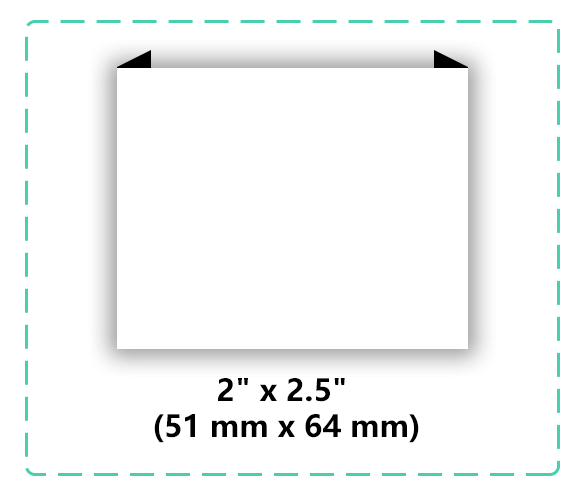
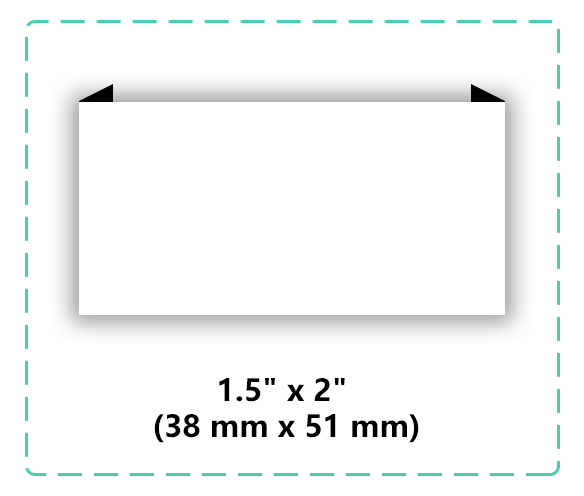
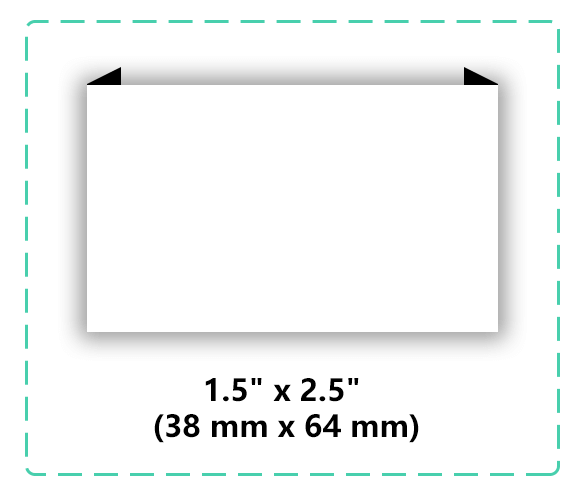
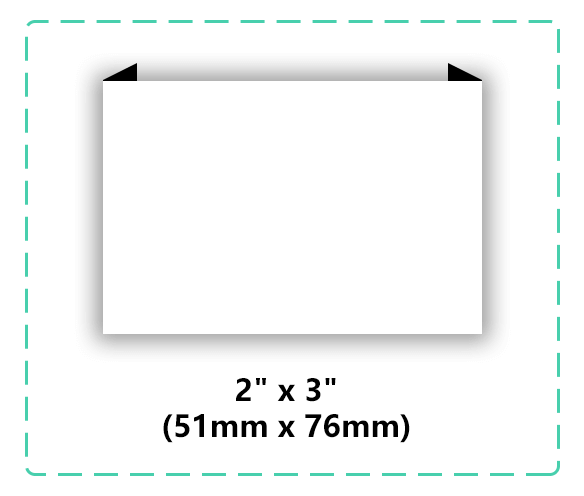
Preferred fold
Quantity
Artwork or text layout
Any required language versions
What Artwork Format Should You Send?
Vector artwork such as AI, EPS or editable PDF is preferred when available, especially for very small text, symbols or multi-language layouts.
If you do not have finished artwork, you can also send us the confirmed text and specifications. We can help organise the information into a clear production layout.
What Does the Digital Proof Confirm?
Before production, we can provide a digital proof for you to review details such as:
Text and spelling
Label size
Fold
Layout
Artwork placement
Colour references
Sewing or fold allowance
The proof is a production approval, not a legal compliance review.
UPPERLABELS manufactures the label according to the content and specifications approved by the customer. The brand or responsible seller should confirm that the final information meets the requirements for its product and selling market.
For file preparation, see our File & Artwork Guide.
If you are not sure about the production specifications, send your information through Get a Quote and we can review the label construction with you.
Which Care Label Material Should You Choose?
The best care label material depends on the garment, the amount of information you need to print and how the finished product will be used.
Comfort
For labels that touch the skin, prioritise a softer construction, especially for T-shirts, underwear, babywear and lightweight garments.
Print Clarity
Small text, care symbols and multiple languages need enough print definition to remain clear at the final label size.
Washing & Durability
The printed information should remain readable through the garment’s normal washing, drying and care cycle.
Garment Processing
Tell us if the garment will be dyed, enzyme washed, stone washed or heavily finished, as these processes may affect the final label.
Label Size & Information
Multiple languages or long care instructions may need a larger label or folded construction to keep the information readable.
Practical Tip:
Choose a care label based on
comfort, print clarity, durability, garment processing and final label size
rather than price alone.
See our Custom Care Labels page for current production options.
Common Care Label Mistakes
A care label can look simple, but small content or layout mistakes can create production problems or make the final label difficult to use.
01
Treating Every Market the Same
The USA, EU, Great Britain, Northern Ireland and Canada do not follow exactly the same textile and care-labelling rules.
02
Mixing Different Label Requirements
Fibre content, care instructions, origin and company information are not always required under the same rules.
03
Using Incorrect Fibre Information
Use the correct generic fibre names and make sure the percentages match the actual garment composition.
04
Making the Label Too Small
Leave enough space for small text, care symbols, multiple languages and other required information to remain readable.
05
Using Unconfirmed Care Instructions
Care instructions should reflect a safe method for the finished garment, including its fabric, dyes, trims and finishing.
06
Forgetting Language or Market Versions
Confirm whether you need English, English + French, multiple EU languages or separate market-specific versions before production.
07
Treating the Proof as Legal Approval
A digital proof confirms production details. It does not certify that the supplied label content meets every legal requirement.
Final Check Before Production
Confirm your content, selling market, language, label size, artwork and production versions before approving the final proof.
FAQ
Are care instructions legally required on clothing labels?
It depends on the selling market.
In the United States, covered textile apparel is generally subject to the FTC Care Labeling Rule and must include appropriate care instructions.
For the EU and Great Britain textile-labelling rules discussed in this guide, fibre composition is the main mandatory textile information.
In Canada, care labelling is voluntary at the federal level.
Does every clothing label need fibre content?
Many textile products require fibre-content disclosure, but the exact scope and exemptions depend on the product and market.
The USA, European Union, Great Britain, Northern Ireland and Canada all have textile fibre-labelling rules, but the requirements are not identical.
Always check the rules that apply to your specific product before finalising the label.
Is country of origin required on a clothing label?
It depends on the market.
For most covered textile products sold in the United States, country of origin is part of the required textile disclosure.
Under the EU, Great Britain and Canadian textile-labelling frameworks discussed in this guide, country of origin is not the same core textile-labelling requirement as fibre composition. Other origin-marking rules may still apply.
Do Canadian clothing labels need English and French?
Required fibre-content information is generally shown in both English and French under Canada’s federal textile-labelling rules.
This includes fibre names and information directly related to fibre content.
Dealer identification does not generally need to be bilingual under the federal rules. Quebec may have additional French-language requirements.
Is an RN required on U.S. clothing labels?
No.
An FTC Registered Identification Number (RN) can generally be used instead of a qualifying company name, but obtaining an RN is optional.
The FTC does not issue RNs to businesses located outside the United States.
Can I use care symbols without written instructions?
It depends on the market and the symbol system.
For covered apparel in the United States, the FTC permits the specified ASTM care-symbol system to be used without written care terms when the requirements of the Care Labeling Rule are met.
Do not assume that the same symbol system automatically works for every market.
Can one care label work for the USA, EU, UK and Canada?
Sometimes, but there is no universal label template that automatically guarantees compliance in every market.
A multi-market label may need to account for differences in:
- Fibre-content requirements
- Care instructions
- Country of origin
- Business or dealer identification
- Language
- Market-specific rules
If several market versions are needed, confirm the content and quantity for each version before production.
Does UPPERLABELS verify that my care label is legally compliant?
UPPERLABELS manufactures care labels according to the content and specifications approved by the customer.
We can help organise confirmed information into a readable production layout and provide a digital proof for review.
However, the digital proof is a production approval, not legal certification. The brand, importer or responsible seller should confirm the legal requirements that apply to the product and selling market before production.
Official Regulatory Sources
Labelling rules can change, and additional product-specific or local requirements may apply. For current requirements, check the relevant official authority before approving your final label content.
United States
FTC — Complying with the Care Labeling Rule
FTC — Apparel and Textile Labeling
European Union
European Commission — Textile Label
EUR-Lex — Regulation (EU) No 1007/2011
Great Britain
Northern Ireland
Northern Ireland Business Info — Textile Labelling Rules
Canada
Competition Bureau Canada — Textile Labelling Requirements
Competition Bureau Canada — Requirements in a Nutshell
This guide provides general information for clothing brands and is not legal advice. Last reviewed: August 2026.
Related Label Guides
Need Help Preparing Your Care Label?
Once you have confirmed the information required for your garment and selling market, UPPERLABELS can help turn it into a clear, production-ready printed care label.
Send us your:
Label content
Size
Quantity
Fold
Artwork
Language or version requirements
We can review the production details and prepare a digital proof before manufacturing.
Need Custom Care Labels for Your Clothing?
Send us your label text, size, material, and quantity. We can prepare a digital proof before production.
Order Care Labels Get a Quote