Worldwide Shipping · Get a Custom Quote

Clothing Label Materials Guide: Woven, Cotton, Printed & Heat Transfer Options

Choosing the right clothing label material starts with understanding what the label needs to do.
A main brand label, care label, soft cotton label, and tagless heat transfer label solve different problems. The best option depends on your artwork, garment type, placement, comfort requirements, amount of information, and preferred finish.
This guide compares the main label options available to clothing brands and explains how common industry terms such as damask, satin, and taffeta relate to woven label construction.
1. Woven Labels: Best for Visible Brand Identity
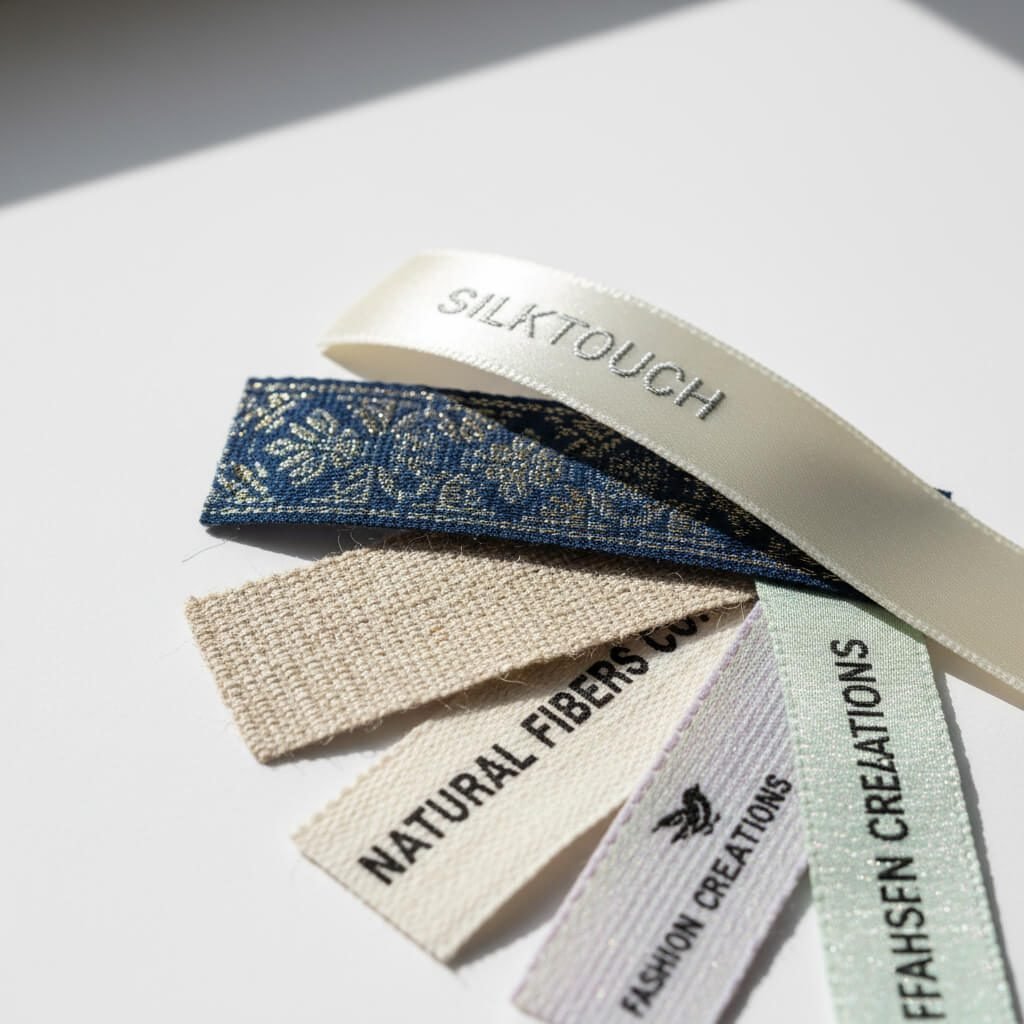
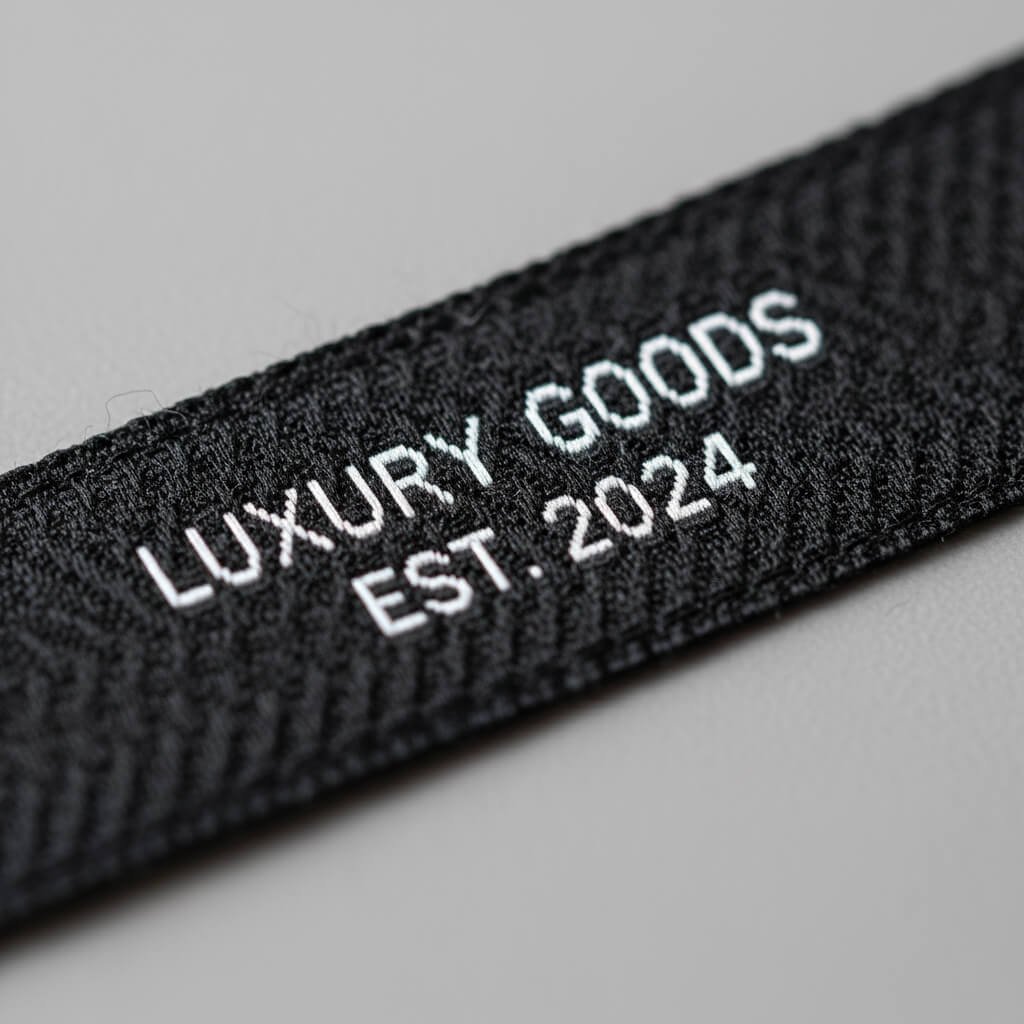
Woven labels create the logo, text, and background using woven threads rather than printing artwork onto the surface.
They are commonly used as main brand labels because the woven construction gives the label a visible textile texture and allows the branding to become a permanent part of the garment.
Woven labels work particularly well for:
- neck labels
- hem labels
- side seam branding
- jackets and hoodies
- bags and accessories
The final result depends on the artwork, finished size, thread setup, fold type, and placement. Clean logos and clearly separated design elements generally translate well into woven production.
Choose woven labels when the label itself is an important part of the product’s visible branding.
2. Cotton Labels: Natural Texture and a Softer Visual Style
Cotton labels are a separate fabric label option rather than simply another woven-label weave.
They are often chosen when the brand wants a more natural, understated, or craft-oriented appearance. The fabric surface gives the label a different character from a traditional woven brand label.
Cotton labels can work well for:
- handmade products
- natural or minimalist branding
- children’s clothing
- accessories
- home textiles
- products where a softer fabric appearance fits the brand
The artwork still needs to match the production method. Very small text, extremely fine details, or complex graphics may require adjustment depending on the label size and printing method.
Choose cotton labels when the natural fabric look is part of the brand presentation.
3. Printed Fabric Labels: Better for Fine Detail and Flexible Artwork
Printed fabric labels apply artwork or information onto the label surface rather than forming the design with woven threads.
This makes them useful when the artwork contains details that are difficult to reproduce clearly through weaving, such as:
- fine text
- full-color artwork
- gradients
- care information
- QR codes
Printed labels can be used for both branding and garment information. They are especially practical when readability and artwork detail matter more than having a woven texture.
Choose printed labels when detail, color flexibility, or information capacity is the priority.
4. Heat Transfer Labels: A Tagless Option for Close-to-Skin Garments
Heat transfer labels apply the branding or information directly onto the garment instead of using a separate sewn-in fabric label.
They are commonly used when reducing bulk or avoiding a sewn-in label is important.
Typical applications include:
- activewear
- underwear
- lightweight garments
- children’s clothing
- neck branding
- size information
- garments where a tagless feel is preferred
Heat transfer is not automatically the best choice for every garment. The fabric, stretch, application area, artwork, and intended use should all be reviewed before production.
Choose heat transfer when a tagless, lightweight application is more important than a physical fabric label.
What About Damask, Satin and Taffeta?
Damask, satin, and taffeta are common terms used in the label industry to describe different woven constructions, surfaces, or finishing styles.
These terms can be useful when discussing texture, density, softness, and detail, but their exact specifications may vary between manufacturers.
In general:
Higher-density woven constructions can help reproduce smaller design elements more clearly when the artwork and label size are suitable.
Smoother or satin-like surfaces may be selected when hand feel and surface appearance are important.
More basic woven constructions may suit simpler artwork or applications where very fine detail is not required.
However, there is no single weave that is automatically “best” for every brand.
UPPERLABELS does not treat “damask” as a separate product category. We recommend the woven construction based on your artwork, finished size, placement, garment type, and intended use.
Clothing Label Options: Quick Comparison
A quick way to compare the main label types.
| Factor | Woven Labels | Cotton Labels | Printed Labels | Heat Transfer |
|---|---|---|---|---|
| Best for | Visible brand labels | Natural fabric branding | Fine detail and information | Tagless applications |
| Typical use | Neck, hem, side seam | Apparel, handmade items, accessories | Brand, care, and size labels | Activewear, underwear, inside neck |
Woven Labels
Best for: Visible brand labels
Typical use: Neck, hem, side seam
Cotton Labels
Best for: Natural fabric branding
Typical use: Apparel, handmade items, accessories
Printed Labels
Best for: Fine detail and information
Typical use: Brand, care, and size labels
Heat Transfer
Best for: Tagless applications
Typical use: Activewear, underwear, inside neck
How to Choose the Right Label Material
1. Start With the Label’s Purpose
Decide whether the label is mainly for branding, garment information, comfort, or a tagless application.
A main brand label and a care label do not need to use the same production method.
2. Check the Artwork
Clean logos and simple text often work well as woven labels. Fine text, gradients, complex graphics, QR codes, and information-heavy layouts may be better suited to printed labels.
3. Consider Comfort and Garment Type
Label comfort depends on the material, finished size, fold, edge finish, placement, and whether the label sits directly against the skin.
For some close-to-skin garments, a thinner printed label or heat transfer may be more suitable.
4. Consider Placement
Neck labels, hem labels, side seam labels, care labels, and external branding areas may all require different constructions.
Choose the label together with its intended placement rather than treating material as a separate decision.
5. Use More Than One Label Type When Needed
Many clothing brands use a combination of label types.
For example:
Main brand identity → Woven label
Care and garment information → Printed care label
Natural fabric branding → Cotton label
Tagless neck application → Heat transfer
A complete labeling system does not need to use one production method for every purpose.
What material is best for clothing brand labels?
There is no single best material for every brand. Woven labels work well for visible textile branding, while cotton, printed, and heat transfer options may be better depending on the artwork, garment, placement, and desired finish.
Is damask a separate type of label?
Damask is an industry term associated with woven construction rather than a separate printed label category. Specifications can vary between manufacturers, so the final construction should be selected based on the artwork and intended use.
Are woven labels better than printed labels?
Not automatically. Woven labels are well suited to textile branding and clean logos, while printed labels are often better for fine text, full color, gradients, care information, and complex artwork.
Are cotton labels the same as woven labels?
Not necessarily. Cotton labels are a separate fabric-label option with their own appearance and production method. They should not automatically be treated as the same category as traditional woven brand labels.
Which label is best for very small text?
Printed labels are often more practical for very small or information-heavy text. Woven labels can reproduce detail, but readability still depends on the artwork, finished size, thread construction, and spacing.
Can I use different label materials on the same garment?
Yes. Many garments use a woven label for branding and a separate printed care label for care instructions, fiber content, size, and origin information.
Not Sure Which Label Material Fits Your Product?
Send us your artwork, garment type, placement, quantity, and the details you already know. We can review the design and recommend a practical label option based on the artwork, intended use, and production requirements.